
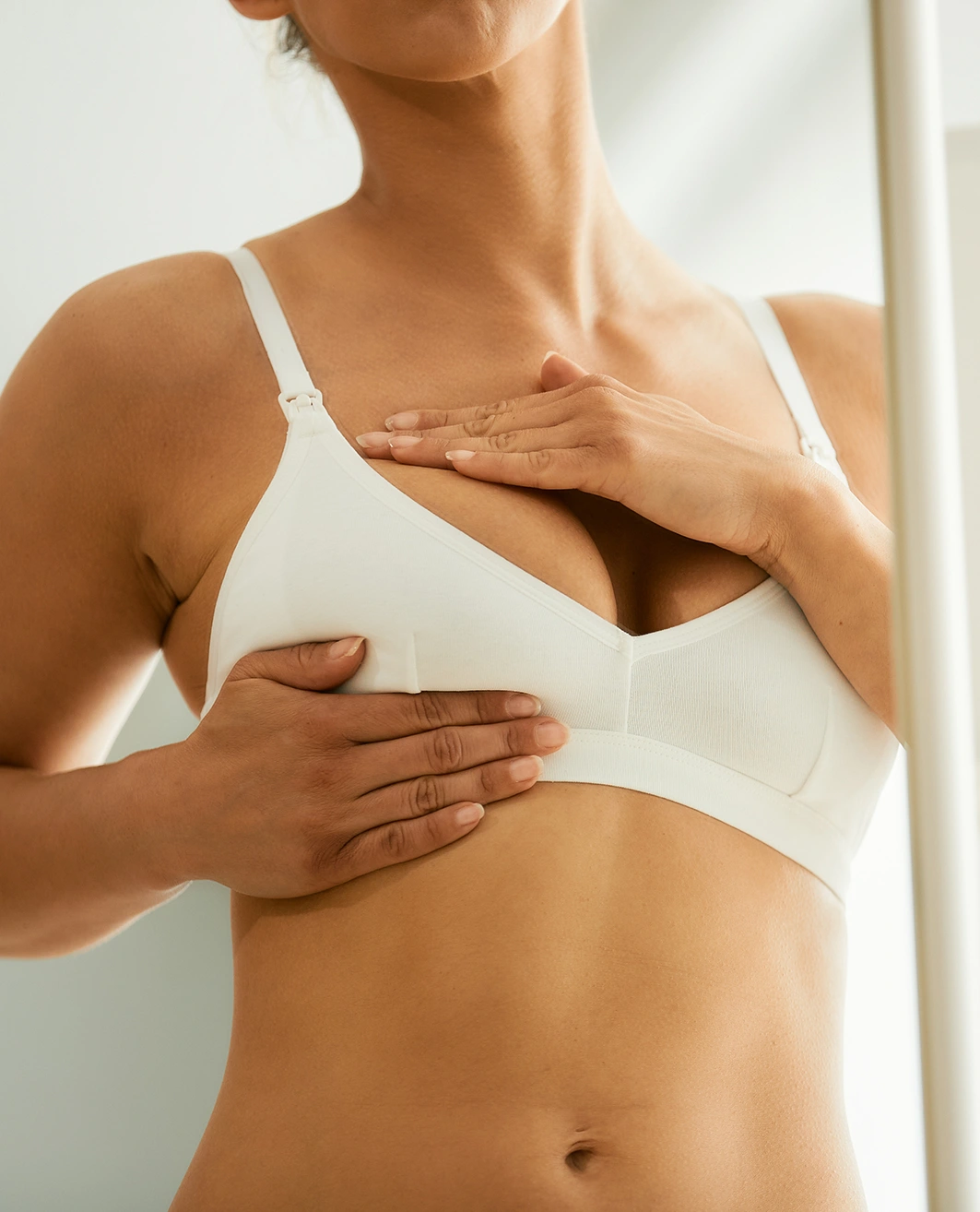
What's the right breast implant size for me?
Choosing the right breast implant size isn’t about picking a number or cup size, it’s about finding a proportion that fits your body. Implant size is measured in volume (cc), but the final result depends on how that volume interacts with your anatomy, tissue, and overall frame.
Factors like breast width, skin elasticity, implant profile, and lifestyle all influence how an implant will look and feel over time. The goal is not just to increase size, but to create a result that feels balanced, natural, and aligned with your expectations.
In this article:
- Breast implant size selection factors: The key anatomical and lifestyle considerations that guide implant size beyond simple measurements.
- Breast implant sizers and visual planning: How surgeons use sizing tools, photos, and reference points to help you visualize your outcome.
- Breast implant size myths: Common misconceptions about cup sizes, cc measurements, and what they actually mean in practice.
- Breast implant consultation checklist: What to bring, what to ask, and how to prepare for a more informed and productive consultation.
- Visit our breast surgery gallery: See real patient results across different sizes, body types, and approaches to help inform your decision.
A more complete look at your options
This page focuses on breast implant sizing. If you’d like a deeper look at procedures, outcomes, and how each approach compares, explore the full breast augmentation guide.

Breast implant size selection factors
Choosing the right implant size is a combination of anatomy, goals, and long-term fit. During consultation, Dr. Plant uses measurements and tissue assessment to recommend options that suit your frame, lifestyle, and desired look—so the decision is guided, not guessed.
While size is often the starting point, it’s these underlying factors that determine how natural and balanced your result will appear.
Breast base width and footprint
Base width is one of the most important sizing factors. Matching implant width to your natural breast footprint helps keep results proportional to your chest and reduces the risk of an implant appearing too wide or sitting outside the natural breast boundary.
This measurement sets the “frame” for sizing—once width is established, volume and projection are adjusted within that range to refine shape rather than stretch beyond it.
Breast tissue and skin stretch
Your tissue thickness and skin elasticity influence how an implant will look, feel, and settle. Thinner coverage can increase the likelihood of visible implant edges or rippling, while tighter tissue may limit how much volume can be safely accommodated in a single procedure.
These factors also affect long-term positioning. Implants that exceed what your tissue can support are more likely to shift or stretch over time, which is why sizing decisions are made with both immediate and long-term outcomes in mind.
Breast implant profile and projection
Projection (profile) affects how far the breast extends forward and how fullness is distributed. Two implants can have the same volume but create very different silhouettes depending on their profile.
This is why cup size alone is not a reliable reference. Profile is used to shape how volume is expressed—whether that means a more subtle slope or a fuller, more projected look—while still staying within the limits of your base width.
Lifestyle and activity level
A size that looks good in clothing should also feel like it fits your life. Work demands, workouts, posture, and comfort preferences all play a role in determining what size will feel natural day-to-day.
Larger implants can add weight and may influence movement or long-term comfort, especially for more active patients. The goal is a plan that supports your aesthetic goals while respecting what your body can comfortably carry over time.
Together, these factors create a range, not a single number. The final decision comes from narrowing that range based on your goals and how each option is expected to look and feel on your body.
Breast Implant Size: Key Factors at a Glance
| Factor | Why It Matters | What It Means for You |
|---|---|---|
| Base width & footprint | Determines how wide the implant can safely sit on your chest | Sets the range for sizing—prevents implants from looking too wide or unnatural |
| Tissue thickness & skin elasticity | Affects how the implant is supported and how it will look over time | Thinner tissue may limit size; stronger support allows more flexibility |
| Implant profile (projection) | Controls how far the breast projects forward and how fullness is distributed | Two implants with the same volume can look very different depending on profile |
| Lifestyle & activity level | Influences comfort, movement, and long-term wearability | Larger implants may feel heavier or less suited to active routines |
| Your aesthetic goal | Guides how subtle or pronounced the final result should be | Helps narrow options within your anatomical limits |
Breast implant sizers and visual planning
Implant sizing becomes more intuitive when you can see and feel options in context. Sizers and visual references help translate a number (cc) into how volume, shape, and proportion will actually appear on your body.
These tools are not about choosing an exact size, they’re used to explore a range and understand how different options may look and feel before making a final decision.
What breast implant sizers show
Sizers provide a practical way to compare relative volume and proportion during consultation. Worn inside a bra or placed temporarily, they help you visualize how different sizes interact with your frame and clothing.
They are a planning tool, not a prediction. Final results will vary based on implant profile, tissue characteristics, and how the implant settles over time, which is why sizing decisions are always made alongside anatomical measurements.
Photos and reference points
Bringing a small set of inspiration photos can help communicate your aesthetic preferences more clearly than numbers alone. Focus on images that reflect the shape, proportion, and overall look you’re drawn to (not just size).
The most useful references are patients with a similar body type to yours. Your surgeon can then translate those visuals into what is realistic for your anatomy and explain how different implant choices would be used to achieve a comparable result.
Together, sizers, measurements, and visual references help narrow a range of options into a plan that feels both realistic and aligned with your goals.
Breast implant size myths
| Myth | Reality |
|---|---|
| “I want to go up one cup size.” | Cup size is not standardized. The same implant can look very different depending on your anatomy, band size, and implant profile. |
| “A specific cc equals a specific cup size.” | There is no fixed conversion. Volume (cc) interacts with your chest width, tissue, and implant shape to create the final result. |
| “Bigger implants always look better.” | Larger implants can exceed what your tissue can support, increasing the risk of an unnatural look or long-term stretching. |
| “Implant size is the most important decision.” | Size is just one variable. Base width, tissue quality, and implant profile often have a greater impact on the final result. |
| “All 300cc implants look the same.” | Implants with the same volume can look very different depending on profile, width, and how they sit on your body. |
| “I can choose my size based on photos alone.” | Photos help communicate preferences, but your anatomy determines what is achievable and how a similar look would be created. |
| “Trying on sizers shows exactly how I’ll look.” | Sizers give a general sense of volume, but they don’t reflect how implants settle, move, or integrate with your tissue over time. |
| “Smaller implants always look more natural.” | “Natural” depends on proportion and fit—not just size. A well-matched implant can look natural at a range of volumes. |
| “Implants will stay exactly where they are placed.” | Implants settle over time as tissues relax, which can slightly change shape and position in the early months after surgery. |
| “I should choose the largest size my body allows.” | The goal is balance, not maximum volume. Choosing within your anatomical limits supports better long-term results. |
Breast implant consultation checklist
What to come prepared with:
- Your top 1–2 goals, clearly defined: For example: more upper fullness, improved proportion, subtle vs. noticeable change
- A small set of reference photos (3–5 max): Focus on shape and proportion (not just size) and ideally choose examples with a similar body type.
- Your medical history and current medications: Including prior surgeries, supplements, and any breast-related history that may influence planning.
Questions to ask:
- What is my breast base width, and how does that limit or guide implant size?
- What size range fits my tissues safely—not just what is possible, but what will hold up over time?
- How does implant profile change the look I’m aiming for, even at the same volume?
- What trade-offs come with going larger or smaller in my case?
- How will placement (over vs under the muscle) affect softness, contour, and visibility?
- What changes should I expect as implants settle, and how might that affect the final shape?
A strong consultation isn’t about choosing a size, it’s about narrowing a range of options into a plan that fits your anatomy, goals, and long-term expectations.
Visit our breast surgery gallery
If you are trying to define “my ideal size,” real outcomes can help. Explore the before and after gallery, save a few results that feel aligned with your goals, and bring them to your consultation so Dr. Plant can explain what is realistic for your anatomy. Individual results vary.
Prepare for your consultation with confidence
Want to make the most of your consultation with Dr. Plant? Download our plastic surgery consultation guide to help you organize your goals, understand your options, and come prepared with the right questions.