

You may notice that your body feels different without being able to explain exactly why. Perhaps your shape has changed after pregnancy or weight loss. Maybe aging has affected an area that once felt familiar, or a long-standing concern has gradually become more noticeable.
You know you would like to feel more comfortable in your body, but you are not sure which options are available, whether surgery is appropriate, or even how to begin the conversation.
That uncertainty is a valid starting point. You do not need to know the name of a procedure or arrive with a complete plan. It is often more useful to begin by identifying what has changed, why it matters to you, and what you hope to improve.
From there, a surgeon can assess the factors contributing to your concern and explain what may realistically be possible. This is the purpose of personalized treatment planning: recommendations are developed around your anatomy, health, lifestyle, priorities, and expectations rather than a standard list of procedures.
In this article:
- You Don’t Need to Have It All Figured Out
- Start With Your Goals, Not a Procedure
- Every Body Is Different, and So Is Every Recommendation
- The Right Solution Depends on What’s Causing Your Concern
- What Happens During Your Plastic Surgery Consultation?
- Gain Clarity Through a Personalized Consultation

You Don’t Need to Have It All Figured Out
Many people assume they should know exactly what procedure they want before meeting with a plastic surgeon. In practice, patients often begin with questions rather than answers.
You may be concerned about loose skin following weight loss, changes to your abdomen after pregnancy, or an area that no longer feels balanced with the rest of your body. You may also have more than one concern and feel uncertain about which one deserves attention first.
What you see in the mirror does not always reveal the anatomical reason behind it. A change in contour may relate to localized fat, skin laxity, changes in muscle support, tissue position, or several factors at once. Because these concerns can appear similar on the surface, selecting a procedure through online research or photographs alone may lead you in the wrong direction.
You do not have to identify a treatment before your consultation. Instead, describe what you have noticed, how it affects you, and what you would like to understand. The surgeon’s role is to assess the underlying factors, discuss appropriate options, and explain the benefits, limitations, risks, and recovery considerations associated with each one.

Start With Your Goals, Not a Procedure
Procedure names can provide useful context, but they should not define your starting point. A treatment is only appropriate when it addresses the actual concern and aligns with what the patient hopes to achieve.
Before a consultation, it can be helpful to reflect on what has changed and what a meaningful improvement would look like to you. If you have more than one concern, it may also help to think about where to begin rather than trying to solve everything at once.
What’s Been Bothering You?
Try to describe the concern in your own words.
Perhaps clothing no longer fits the way it once did. You may feel uncomfortable with loose skin, persistent fullness in a particular area, or changes in breast shape or position. You might feel that one part of your body looks out of proportion, or you may have several concerns that seem connected.
Consider asking yourself:
- What change do I notice most often?
- When does it affect how I feel or what I wear?
- Is there one concern that feels more important than the others?
- Am I looking for restoration, refinement, or a more noticeable change?
These questions are not intended to determine which procedure you need. They help clarify what matters most to you.
How Has This Changed Over Time?
The timeline of a concern can provide important context.
Pregnancy, aging, weight fluctuations, major weight loss, hormonal changes, and previous surgery can all affect skin, fat distribution, tissue position, and muscle support. Some changes develop gradually, while others become noticeable after a specific life event.
It is also important to consider whether your body is still changing. Someone who is continuing to lose weight may benefit from waiting until their weight has stabilized before considering post-weight loss body contouring. A patient considering future pregnancy may decide to postpone certain procedures because pregnancy can alter the result.
Understanding how and when the concern developed helps support a recommendation that reflects where you are now and where you expect to be in the future.
What Outcome Feels Right For You?
It can also be helpful to think about the type of change you would consider meaningful. Some patients are looking to restore changes that occurred after pregnancy, weight loss, or aging, while others are interested in a more subtle refinement or improvement in overall proportion.
Try to focus less on a specific procedure or an exact result you have seen elsewhere and more on what you hope will feel different for you. Consider whether your priority is improving comfort, changing how clothing fits, restoring a previous contour, or creating a more noticeable change in shape.
You do not need to arrive at your consultation with a perfectly defined goal. Discussing what you hope to improve gives your surgeon useful context for explaining what may be realistically achievable and which options may align with your expectations.

Every Body Is Different, and So Is Every Recommendation
Two patients can describe similar concerns and receive different recommendations. This does not mean that one approach is better than another. It reflects differences in anatomy, health, lifestyle, priorities, and timing.
A thoughtful recommendation considers more than the area being treated. It also accounts for whether surgery is appropriate, what type of improvement may be achievable, and how the treatment would fit into the patient’s life.
Your Anatomy
Skin quality, fat distribution, muscle support, tissue characteristics, scars, and natural body proportions can all influence which options may be suitable.
For example, changes in breast shape may result from skin laxity, volume loss, tissue descent, or a combination of factors. Each situation may call for a different approach, even when patients describe their goal in similar terms.
A whole-body assessment allows the surgeon to explain what a treatment may improve, what it cannot change, and what trade-offs may be involved.
Your Lifestyle
Recovery is part of the treatment decision.
Your work, exercise routine, caregiving responsibilities, travel plans, and available support at home can affect the timing and scope of surgery. A procedure that is technically possible may not be practical if you cannot take adequate time away from work, avoid certain activities, or arrange help during the early stages of recovery.
Treatment planning should therefore account for how you live, not just how you would like to look.
Your Medical History
Your health and medical history help determine whether surgery can be considered safely.
Previous procedures, medical conditions, medications, allergies, and nicotine use may affect surgical risk, healing, and recovery. In some circumstances, further medical assessment, lifestyle changes, or a delay in treatment may be recommended before proceeding.
Open and accurate communication helps the surgeon assess risk and develop recommendations that prioritize patient safety.
Your Future Plans
Future pregnancy, continued weight loss, changes in physical activity, or other major life events can influence when treatment should take place.
Considering these factors does not mean that you need to predict every change in your life. It means choosing a plan that makes sense beyond the immediate moment. This broader decision-making process is central to personalized treatment planning in plastic surgery.
The Right Solution Depends on What’s Causing Your Concern
A concern that seems straightforward may have several possible causes.
Someone seeking a flatter abdomen, for example, may have localized fat, loose skin, separation or stretching of the abdominal muscles, or a combination of these factors. Liposuction can reduce selected fat deposits, but it does not remove substantial loose skin or repair muscle separation. A tummy tuck addresses different anatomical concerns and involves different scars, risks, and recovery requirements.
This does not mean that every concern requires surgery. Some concerns may be more appropriate for non-surgical body contouring, while others require a surgical approach.
The same principle applies when several areas are involved. Before choosing what to treat, it’s helpful to understand how surgeons prioritize treatment areas, particularly when concerns may affect overall proportion or require different recovery plans.
Start with a treatment plan, not a procedure name
A consultation can help distinguish loose skin from localized fat, tissue position, or muscle changes, and clarify whether surgery is appropriate at all.
→ Read: What Is a Personalized Treatment Plan in Plastic Surgery?
What Happens During Your Plastic Surgery Consultation?
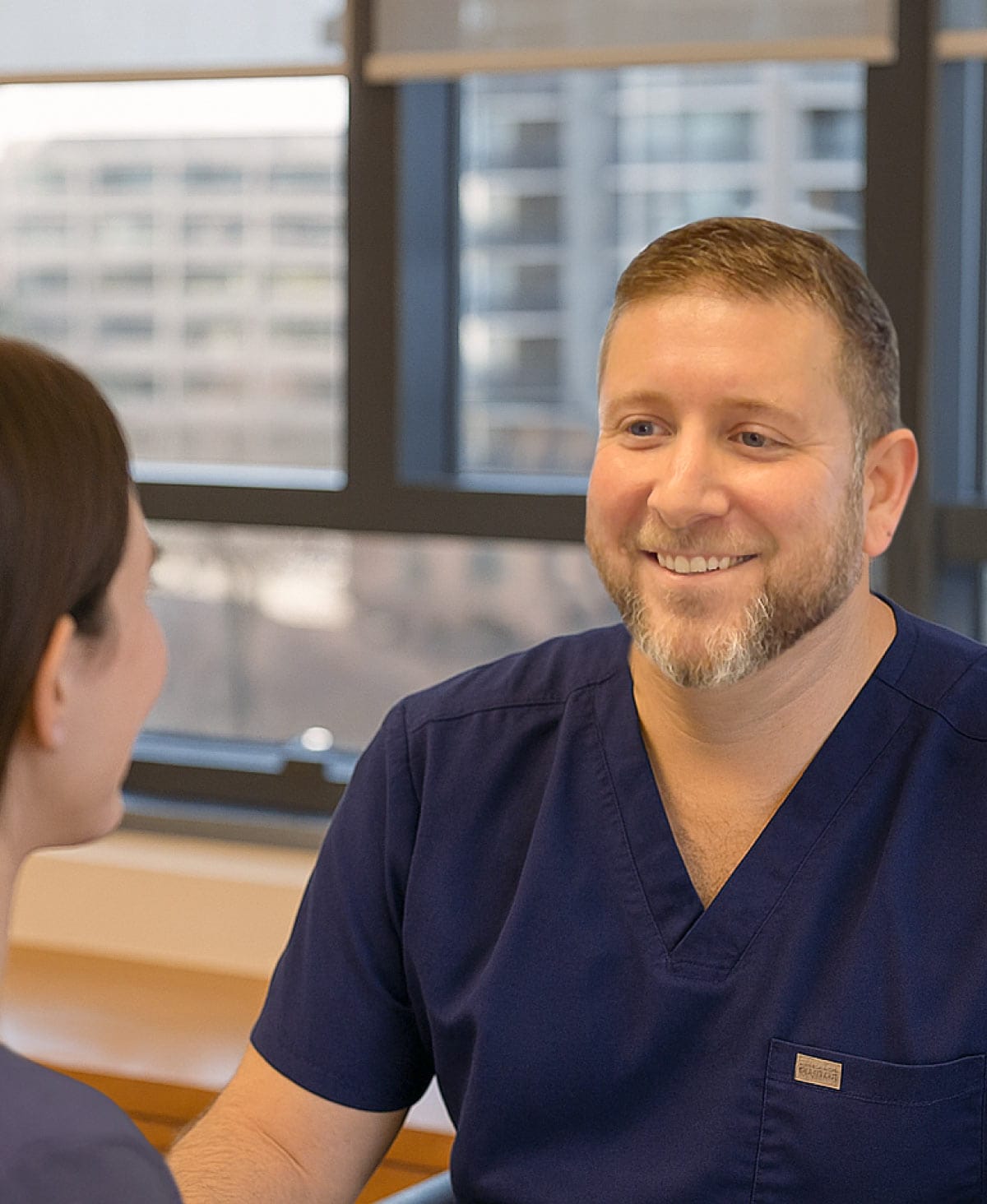
A consultation is a structured opportunity to clarify your concerns, assess your anatomy, and understand your options. It is not a commitment to proceed with surgery.
Getting to Know You and Your Goals
The consultation begins with a conversation about what brought you in.
Dr. Plant will ask about the changes you have noticed, what you hope to improve, and what a satisfactory result would mean to you. You can also discuss any uncertainty, competing priorities, or concerns about surgery and recovery.
This conversation helps establish whether your expectations are realistic and whether the available options align with your goals.
Evaluating Your Anatomy
A physical examination may include a whole-body assessment of skin quality, fat distribution, tissue position, muscle support, body proportions, and existing scars.
The assessment is tailored to the areas being discussed. Its purpose is to identify what may be contributing to your concern and determine which approaches, if any, warrant consideration.
Reviewing Your Options Together
After the assessment, Dr. Plant can explain the relevant body contouring options, along with their expected benefits, limitations, risks, scarring, and recovery requirements.
In some cases, combining body contouring procedures may be appropriate. In others, procedures may be staged, delayed, or not recommended. When a staged surgical approach is recommended, separating procedures can help support safety and recovery.
Questions to Ask About Your Treatment Options
Once your goals and anatomy have been evaluated, you’ll discuss the treatment options that may be appropriate for you.
This conversation may include surgical and non-surgical approaches, the expected benefits and limitations of each option, recovery considerations, and whether treatment should be performed all at once or in stages. You’ll also have an opportunity to discuss potential risks, ask questions, and ensure you have the information needed to make an informed decision.
The goal isn’t to recommend more treatment than you need. It’s to help you understand your options so you can make the decision that’s right for you.
Questions People Often Ask Before Booking
| Question | Answer |
|---|---|
| "Do I need to decide on a procedure first?" | No. You can arrive with questions and a description of what has changed. Your surgeon can help you understand which options, if any, are suitable. |
| "What should I bring to a first consultation?" | Bring your main concerns, relevant medical history and medications, questions about risks and recovery, and any examples that help explain your goals. |
Gain Clarity Through a Personalized Consultation
Exploring plastic surgery does not require you to have already decided to proceed.
A consultation can help you understand what is contributing to your concern, what outcomes may be realistic, and whether treatment fits your health, lifestyle, and long-term plans. It may also confirm that waiting, considering a different approach, or choosing not to pursue treatment is appropriate.
At Lawrence Park Plastic Surgery, Dr. Plant, MD, FRCSC, approaches consultation as an individualized process centred on patient education, safety, and realistic expectations.
You can meet Dr. Plant to understand his approach and credentials, or book a personalized consultation when you are ready to discuss your concerns in greater detail.